Tuesday, June 19, 2012

TWD: Genoise -- the French can have it!


Put me in the failure column for this week's Tuesdays with Dorie. My French strawberry cake would turn anyone off genoise. I have successfully made sponge cake and jelly roll cakes in the past, but genoise was a new experience. Unfortunately, my cake bottom was tough enough to use as paving material. Notice the lighter bottom half in the picture at right. That was the tough and doughy portion.

Rather than cut the 8-inch cake in thirds, put strawberries and whipped cream between the layers, then frost the cake with whipped cream, I elected to cut my cake into rounds using a 3-inch biscuit cutter hoping to salvage at least part of the cake.

I followed the instructions to a T, whipping the mixture until I got the prescribed ribbon of batter. I believe I folded the flour in adequately. Although the bump in the bowl of my Kitchen Aid mixture did hide pockets of flour, I folded and folded until I felt I got all the flour incorporated. I then carefully folded in the butter and a portion of the batter mixture, but to no avail. The cake, particularly the shoe-leather bottom layer, looked inedible.

Soldiering on, I divided my rounds in half, layered each half with strawberries and whipped cream, and tried to soak enough juice into the intractable bottom layer to make it edible. It didn't work. The bottom layer was so rubbery, the strawberry syrup rolled off like water off a duck's back. My husband and I ate the top half of the cakes and put the bottom half down the disposal. I will be very interested to see how others fared with this recipe. Although I was only able to eat the top portion of the cake, I learned that I much prefer the southern version of strawberry shortcake, using warm biscuit-like rounds made with White Lily self-rising flour, lard, buttermilk and sugar. I will concede the genoise version to the French and stick to my tried-and-true shortcake.

Tuesday, June 5, 2012

TWD--Oasis Naan

The Oasis Naan, the latest Tuesdays with Dorie assignment, was not at all what I expected. I have tasted naan once at an Indian restaurant, and I remembered it as being much like an Arabic flatbread; not puffy but relatively flat.

When I read through the ingredients I realized this was basically the formula for French bread. And mine ended up tasting like French bread and looking like French bread once it was cut.

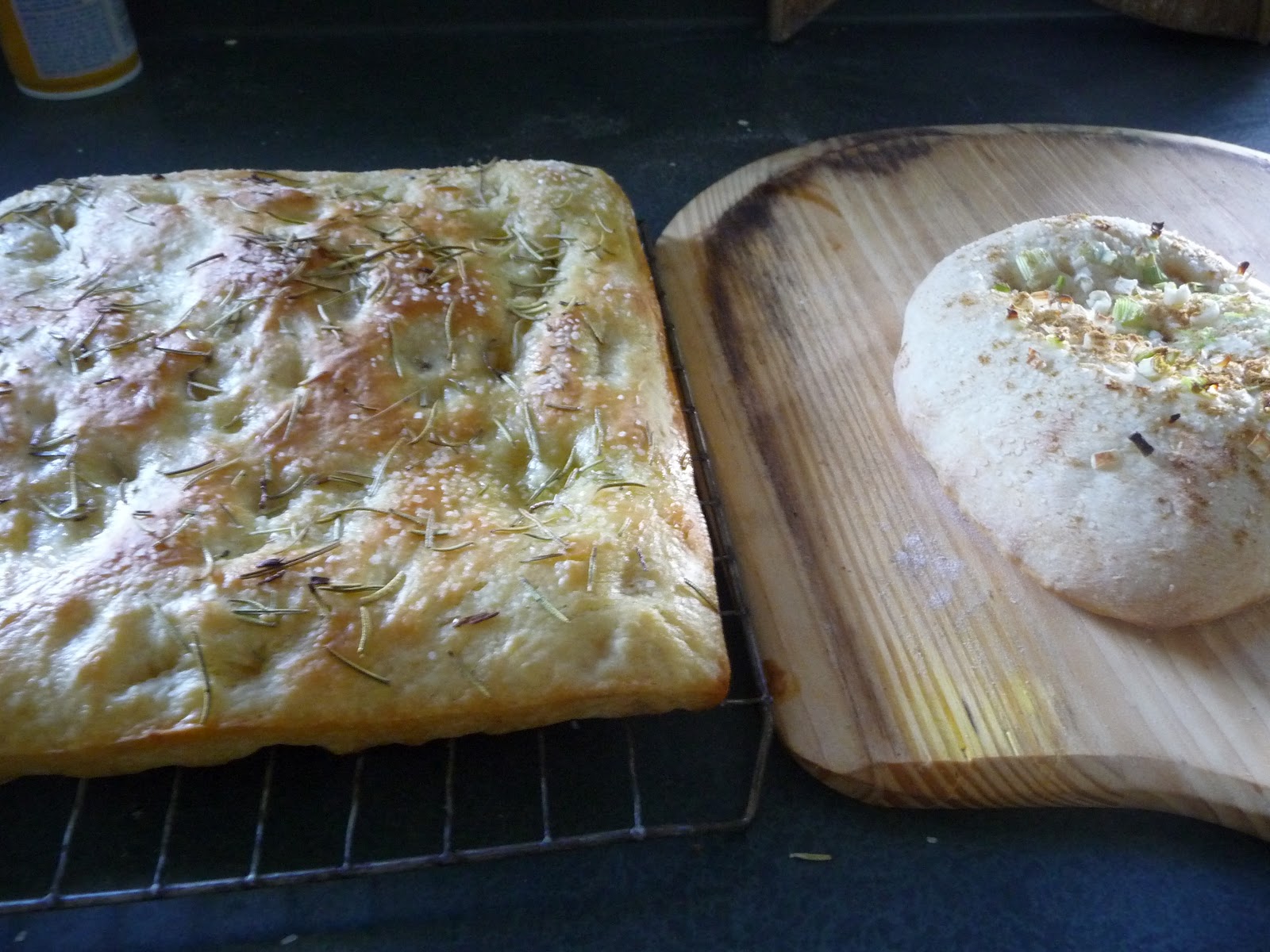
I decided early on to cut the recipe in half, make one naan round and use the rest of the dough for focaccia. The dough was somewhat slack, so I folded it after one hour to help give it structure.

 I portioned the half recipe into fourths, patted one fourth into the five- to six-inch round, then poked away at the dough with the round end of my wire whisk. I wet the dough, added chopped scallion and cumin.

After baking the round for about five to six minutes at 500 degrees, I was surprised to see a puffy end product. After letting it cool, I sliced it, and the crumb was holey, much as a French baguette would be studded with holes. I tried some hummus on one slice, some pimento cheese on another. Both were yummy.

I patted the other three-fourths of the dough into a 9-inch pan, let it rise once, dimpled it with my fingers and poured some olive oil in the holes. I then sprinkled kocher salt and rosemary over the entire surface and baked the foccacia at 500 degrees for 13 minutes. I did not get the oven spring I got with the naan, and I reasoned that was because I let it rise before dimpling it. If I had it to do again, I would bake it after shaping as I did the naan. I am now going to research other recipes for naan and see if they differ from the one in Baking with Julia.

Tuesday, May 15, 2012

TWD -- Pecan Sticky Buns

In short, the Pecan Sticky Buns for our latest Tuesdays with Dorie assignment were good, but not worth the 12-hour effort and the pound of butter it took to make them. After reading through the recipe, I decided at the outset to make only one pan of buns and to turn the other half of the dough into a loaf of brioche. I have always wanted to make brioche, so I'm glad I had this experience, but I doubt if I will repeat it.

I made the mistake of not making the brioche dough the night before baking the buns, so I had to accomplish the task in a day. I started at 9 a.m. and finished at 9 p.m. And, I skipped one step in the lamination process, to save both time and butter.

My KitchenAid was up to the task of mixing the dough for 15 minutes. I did find I had to add a bit more flour, but hestitated adding too much for fear I would throw off the proportions of flour and butter. I was sorely tempted, however, but glad I didn't cave in, for my dough was easy enough to roll after the 4-hour refrigeration. The extra flour would not have been needed.

After letting the dough rise twice (once at room temperature and once in the fridge) I was ready to laminate half of it. The other half was shaped into a bread pan as described in "Baking with Julia" by forming the dough into three balls and placing them side by side in a 9 by 5 bread pan. I let that dough rise at room temperature. The laminated dough went back in the refrigerator for half an hour.

After the 30-minute cold rest, it was ready to roll for the sticky buns. I liked the method of painting the dough with the egg wash. Although I have made sweet rolls all  my adult life, I had never used egg wash using a whole egg. My previous experiences were to either use butter, water or egg white. I used a ground pecan mixture for my nuts, a product I buy in bulk from a Mennonite store in Ohio. I was doubtful if there was enough cinnamon/sugar mixture, but after tasting the buns, I found it to be just right.

After rolling up the dough and slicing it (using the dental floss method by wrapping a length of floss around the dough, then criss-crossing the ends to get a perfect cut, I found I needed to make eight rolls, not seven. If I had cut seven rolls they would have been too tall, especially after the two-hour rise. I found two hours to actually be too much and wished I had let them rise a shorter time period. My rolls were, perhaps, overrisen as they were immense after coming out of the oven.


I first baked the brioche bread, which turned out lovely, then baked the rolls. I put the rolls in a carrying case, then drove them 10 miles north to the bakery where I volunteer. I thought, "Who better to judge the quality of these rolls but my baking companions?" Their verdict? Good, but perhaps not worth all the time and expense. A simpler sweet dough might have been just as tasty with far less time and butter involved. There was one roll left, which I brought home to my husband. He gave it a big thumbs up, even though he is not a sweets lover. He thought the brioche dough resulted in a much more tender and tasty sweet roll than a normal sweet dough would have made. So, perhaps, I will make these again.

Tuesday, May 1, 2012

TWD -- Hungarian Shorbread

My first decision when I looked at the Hungarian Shortbread recipe in "Baking with Julia" for the Internet baking group Tuesday with Dorie was this: Did I really want to make the whole entire recipe? That pound of butter was rather daunting. What if I didn't like it? So, I decided to cut the recipe in half and make it in an 8-inch square pan.

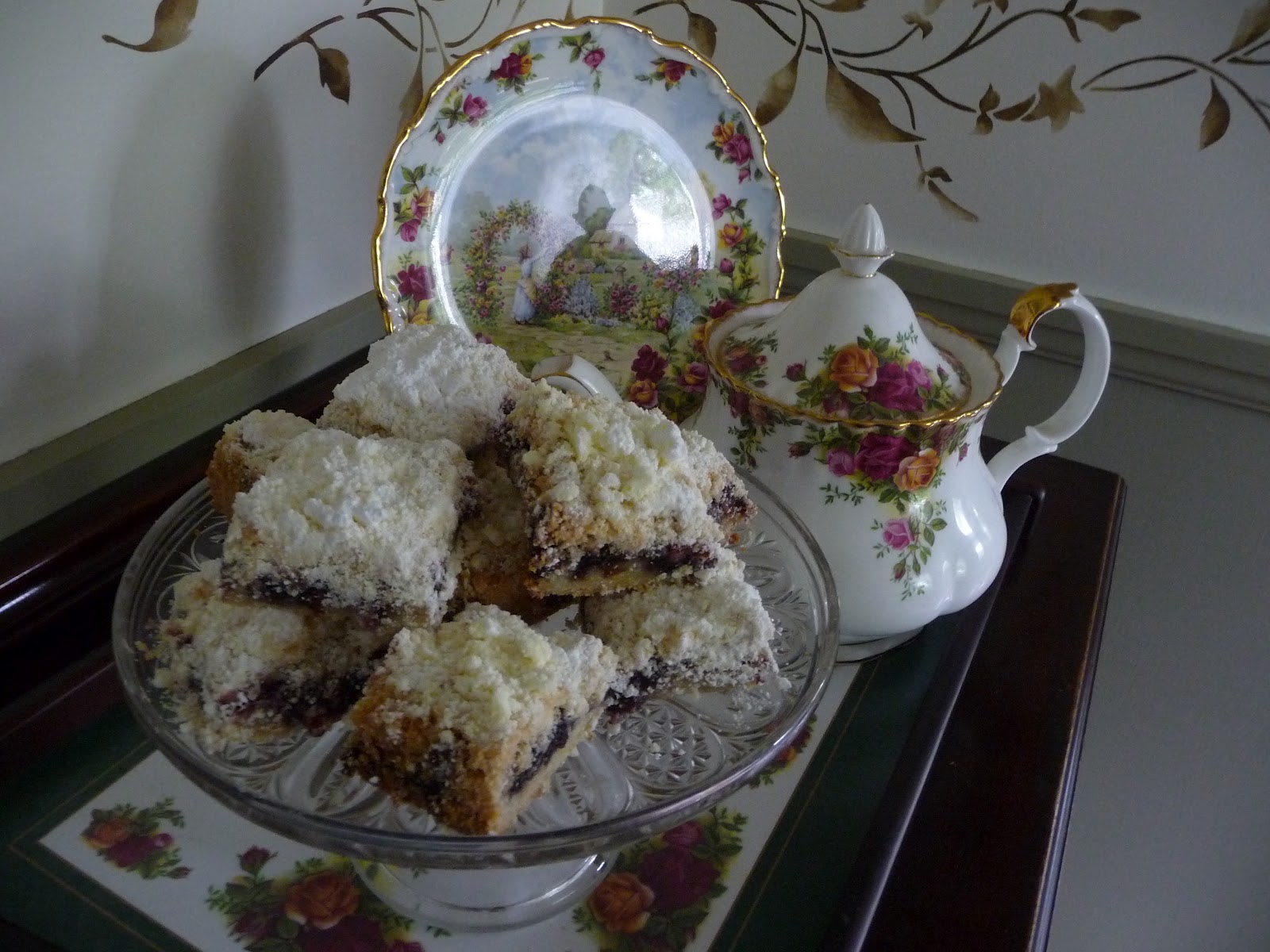
I then needed to decide if I wanted to make the rhubarb filling or substitute for something else. We have a rhubarb patch in the yard, but then I reasoned that some people don't like rhubarb, and we happened to have several jars of homemade blueberry jam on the shelf made last summer from home-grown blueberres. So, I settled on blueberries.

With those decisions behind me, I started creaming the butter. I would like to make a pitch here for the Kitchen Aid paddle beater that has a rubber scraper attached to one side. This all but eliminates having to stop the mixer and scrape down the sides of the bowl. A friend recommended this attachment to me, and her advice was right on. For anyone who makes a lot of cookies or cakes, this beater can't be beat!

There were no quirks in the recipe, and the batter went together like most shortbread batters. I froze the dough into two balls, and after the 30 minutes of freezing, started grating the first ball using the largest hole on my box grater. I debated whether to grease the pan, but since the recipe didn't indicate one should, I didn't. I later came to regret that as the combination of shortbread dough and blueberry jam tended to stick to the sides of the pan.

I baked the shortbread on the short end of the time suggested, since I had cut down the pan size. That seemed to work out well. I then piled on the confectioner's sugar, something I realized after cutting the bars that I had overdone. But the first time one makes anything is a learning experience.

Once the bars cooled, my husband and I sampled one. Both of us loved the combination of shortbread, blueberries and confectioner's sugar. I cut the bars into 16 portions, which were plenty large. Would I make them again? Yes, without a doubt, but perhaps I would next try strawberry or raspberry jam. I still have reservations about rhubarb.

Monday, April 16, 2012

TWD--Lemon Loaf Cake

Lemon loaf cake, this week's recipe for Tuesdays with Dorie, couldn't have come at a better time for this baker. My friend Susan convinced me that I should try baking my way through Baking with Julia with the Internet TWD group after hearing it featured on National Public Radio's Morning Edition. It just so happens that Susan is coming for dinner Thursday evening, and serving the lemon cake with a dollop of lemon curd would be just the thing for a spring-time dessert. And, it is springlike in Ohio this week.

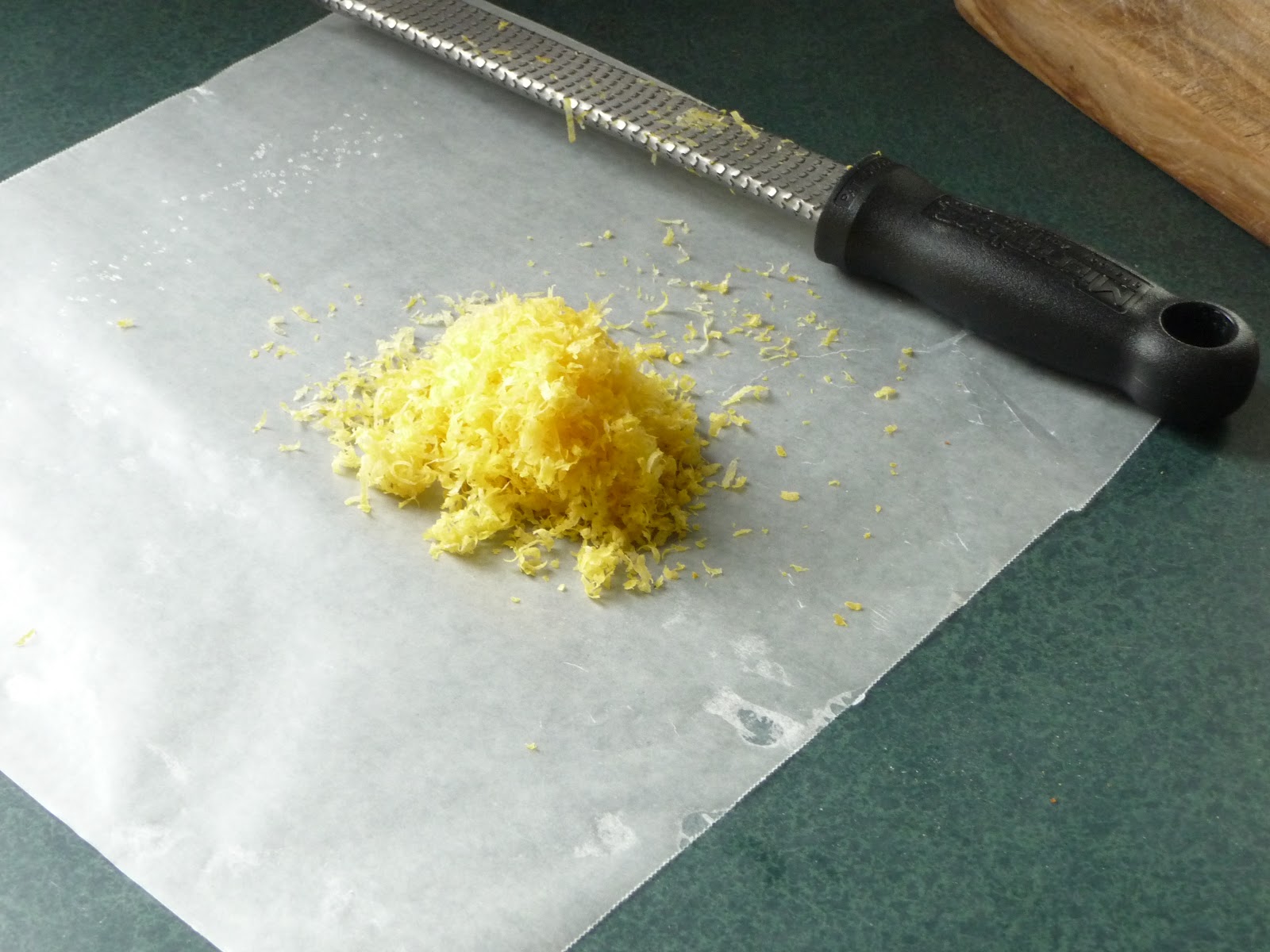
I started the process by zesting the three lemons. I love my zester, given to me by my baking daughter Katie who is doing TWD from her home in Sugar Land, Texas.
I confess, I didn't read through the instructions carefully, so I did not bring my eggs up to room temperature. What to do? I put them in a container of warm water for about five minutes, while I melted the butter and they were quickly warmed sufficiently to put in my Kitchen Aid mixing bowl. I used the wisk attachment to mix the eggs and the sugar.
 The recipe differed from any cake recipe I had previously made. There was no creaming of the butter and sugar, and the instructions did not indicate that the eggs should be beaten enough to incorporate air. I began to wonder if this cake would rise, particularly since there was so little baking powder in the recipe.

After adding all the ingredients and mixing them as indicated in the recipe, I poured the batter in a 9 by 5 pan, as instructed. However, there seemed to be too little batter for a loaf pan of this size. I wondered if an 8 by 4 pan might have been more appropriate.

I set my timer for 50 minutes, the minimum required for the recipe, but found that it didn't pass the toothpick test after that amount of time. I added another 5 minutes, and then the toothpick came out clean.
 The cake came out of the pan very nicely, after waiting the requisite 10 minutes. However, I would have liked it to look taller and think if I'd used a smaller pan it would have. I can't report on the taste yet, since I froze the cake, waiting for Susan's arrival on Thursday.

Wednesday, March 28, 2012

TWD -- Pizza Rustica

Pizza Rustica,  the latest Tuesdays with Dorie experiement, was unlike any pizza I have ever made. If nothing else, I learned about this dish and discovered possibilities to vary the recipe provided in "Baking with Julia."

The dough was different than any pastry dough I have ever made. However, it went together well and I thought the food processor directions were right on. The dough became very smooth (like a babie's bottom) once it was kneaded a little after the processing was complete.

After chilling the dough, I set it out of the refrigerator about an hour before rolling. This made rolling very easy, and I used a pastry cloth and rolling pin cover as I do for pie dough.

 I learned a tip about this at the bakery where I volunteer. Instead of washing the cloth (which will make it limp after many washings), the bakery's cloths are not washed, but scraped free of flour and stored, folded in a plastic bag, in the refrigerator. This would inhibit cupboard moths from attacking.

I decided that the filling appeared rather bland, and because we had some fresh asparagus, I chopped about a cup's worth, blanched it for about two minutes, and added it to the mix. The addition proved worthwhile and led me to believe that a number of vegetable add-ins would be welcome.

After the pie was baked, I wondered if one had to wait until it was totally cool before eating it. I decided to cut it while not hot, but warm, and that worked wonderfully. Was it good? I thought the mixture of flavors, including the sugar in the dough, were wonderful. My husband, however, thought the dish would have been improved by eliminating the sugar. He also much prefers traditioanl pizza, although I contend that comparing it to what we normally think of pizza is like comparing apples to oranges. This would be a great brunch dish.

Monday, March 19, 2012

TWD - Irish soda bread is child's play

After making rugalach two weeks ago, Irish soda bread was a walk in the park. In fact, the recipe looked so easy, that I decided to have three of my grandchildren make it. Since schools so longer offer Home Ec, it has been my goal as a grandmother to spend some time with my grandkids both cooking (namely baking) and sewing.

We started the Irish soda bread experiment with my showing the three kids (6-year-old twin girls, and their 7-year-old brother) where Ireland is located in relation to the rest of Europe, namely England, Scotland and Wales. There were pretty amazed it was so far away from where they live (Ohio). And since they had just experienced St. Patrick's Day, they were somewhat familiar with Ireland and things Irish.

From there, we measured out the flour, using a scale, and the twins scooped in flour until we got to 1 pound, 4 ounces. Using the 5 ounce per cup suggestion in "Baking with Julia," I reasoned that we should reach 20 ounces of flour to make the bread.


The twins then took turns adding the soda, salt and buttermilk. Two out of three of the kids liked raisins, so we decided to knead in raisins in half of the dough, leave the other half plain, then merge the two halves together.


 That seemed to work well and that way everyone was happy. One of the kids slashed the top, and the bread went into the oven for the 50-mintue bake.

We thought the bread looked much like the picture in the book, and all three liked the taste. It couldn't have been easier!